7 Days is a weekly roundup of picks of what's been happening in the world of technology - written with a dash of humor, a hint of exasperation, and an endless supply of (black) coffee.
This week's highlights include JDownloader getting hacked, the story behind the TAB key, Google Chrome silently downloading a 4GB AI file, and Apple knocking on Intel's door for future chips. Let's get started.
JDownloader got hacked

Let's start with some big security news from the week. Attackers compromised the popular download manager, JDownloader, to serve malware-infected installers to Windows and Linux users for over a day. A Reddit user was among the first to report suspicious activity after Windows SmartScreen flagged fresh downloads, which the JDownloader team later confirmed as a breach and took down the website to fix.
A major supply chain attack targeting the imaging software DAEMON Tools was also uncovered, where malicious installers were distributed through official channels since early April 2026. Its parent company confirmed that the incident was caused by unauthorized interference within its build environment, resulting in compromised installation packages being distributed.
A brief history of TAB key

Microsoft veteran Raymond Chen shed light on a lesser-known story from the days of OS/2. The Redmond giant and IBM debated which key should move the cursor between fields in dialog boxes. It turned into a hilarious conflict as the issue reached IBM's VP, who opposed the TAB key choice. Microsoft effectively ended the dispute by responding: "Bill Gates’s mother is not interested in the TAB key.”
Fake moustaches

The UK government is trying to protect kids by putting them behind age checks while using the internet. A new report tried to check the real impacts of the Online Safety Act and found that dodging age verification systems online can be as easy as typing the wrong birthday or drawing a fake mustache on the face during image-based checks.
Meanwhile, tech giants and civil rights groups, including Mozilla, Tor, and Proton, warned that the UK's age verification plan threatens the open web. It's argued that the measures will require all users to prove their age, and might also result in the creation of large databases full of sensitive ID data.
Speaking of underage users, Meta is also deploying an AI on Facebook and Instagram to scan photos and videos for physical cues, such as height and bone structure, to figure out if a user is under 13.
PCIe 8.0 is on the way

Your SSDs and GPUs are going to get a lot faster in the coming future, thanks to the freshly announced PCIe 8.0 specification Draft 0.5. The next-gen interconnect standard is on track for a 2028 release, bringing support for NVMe SSDs up to 8x faster than Gen5.
It's "by design"
A new proof-of-concept and working demo highlighted how passwords get handled in Microsoft Edge. It loads saved user credentials into system memory in plaintext at startup, even when they're not being actively used. While it exposes the browser to potential password leaks, Microsoft apparently categorized this behavior as "by design" when the researcher informed the company about the issue.
On a positive note, Microsoft is baking a new Edge feature to simplify website troubleshooting by helping you resolve compatibility issues directly from the browser interface. The browser will provide contextual prompts when a website may not be functioning properly or as intended.
Google Chrome caught in the act

Google is pushing AI heavily, but sometimes, it can be behind your back. Chrome 147 was caught silently downloading an on-device Gemini Nano file named weights.bin, which takes up 4GB of storage. While it raises privacy, data, and legal concerns, it was reported that deleting the file causes Chrome to re-download the model without telling you. There is an official Windows 11 Registry mod that blocks the automatic download.
Spotify goes old school

A command-line tool is probably the last thing you'd expect from Spotify, a company that makes a living by streaming audio to your ears. But Spotify had reasons to launch a new CLI tool; it lets AI agents create and upload AI-generated podcasts directly to your library.
Save to Spotify can connect with agents such as OpenClaw, Claude Code, or OpenAI Codex, allowing users to create custom audio briefings, study guides, and daily itineraries, and listen to these Personal Podcasts in the Spotify app.
Buying eBay

GameStop wants to add eBay to its shopping cart. While eBay is about four times bigger, the video game retailer proposed to acquire 100% of eBay for $125 per share. It's an attempt to benefit from eBay's 1,600 US locations, which will give GameStop a national network for authentication, intake, fulfillment, and live commerce. GameStop will arrange the money by cutting expenses in different departments.
Notepad++ on macOS (unofficially)
The original creator of NotePad++, Don Ho, has distanced himself from a new macOS port developed by Andrey Letov. The vibecoded port works natively on both Apple Silicon and Intel Macs. However, Letov faced backlash from Ho and the Notepad++ community for using the Notepad++ name and chameleon icon, making it appear like an official product. The developer later announced that they would use a new logo, a refined name, and a new domain with version 1.0.6.
Goodbye 3D avatars

Tech companies remove the features that don't get traction. WhatsApp is pulling the plug on a four-year-old feature called 3D avatars. A message posted on its help center revealed that the instant messaging app started shutting down the feature on Android and iOS, noting that any custom sticker pack you already have will "still be available to use."
End of end-to-end encryption

Meta-owned Instagram has stopped offering end-to-end encryption in its DMs. To begin with, Instagram's E2EE was a manual option buried in the chat settings on a per-conversation basis, not a default setting like WhatsApp. The company said it's killing the feature because very few people were using it. Note that chats will still be encrypted with the standard transport-level encryption to protect messages when they travel between your device and Meta's servers.
What happened at Google this week

There were several other interesting stories related to Google over the week:
- Frustrated Pixel users: Google's May 2026 update for Pixel brings several fixes, but it doesn't appear to address the widely discussed idle battery drain problem. User reports claimed that excessive battery drain happens even when the phone is not in active use.
- New Fitbit is here: Google finally introduced the new Fitbit Air screenless fitness tracker with a starting price of $99.99 to rival Whoop and Oura. Even with so many sensors, the band can last up to a week, and tags along with the Google Health Coach service for AI-powered insights.
- Killed by Google: With the new health service in place, the search giant pulled the plug on Google Fit and the Fit app, replacing them with the Google Health app as the new unified platform.
- Google Home updates: A major update for Google Home arrived this week, bringing a wave of new automation starters, camera features, and other updates for smart home users.
- Automatic livestream fallback: A new Google Meet feature improves large meetings by automatically redirecting additional users to a live stream rather than turning them away.
- Google Flow Music: Google has partnered with Believe to push its AI music creation tools to the next generation of musicians, improving its Flow Music AI tool in the process.
- AICore eating storage: Google updated Android's AICore support page to note that the service temporarily uses extra storage to store both old and new AI model versions during background updates.
What happened at Apple this week
Apple is about a month away from hosting one of its biggest tech events of the year, WWDC 2026. In the meantime, you can catch up on several stories related to the Cupertino giant:
- Prove you're a student: In the US, Apple now requires students and teachers to provide documents and proof of their status before accessing education discounts on its online store.
- Made by Intel: Apple may have abandoned Intel-designed chips for Mac computers. But the company is in early talks with the silicon giant to manufacture Apple-designed chips for future devices. The iPhone maker is also in talks with Samsung and Intel to use their US-based production facilities for processor manufacturing.
- Same Same, but different: Another leak strengthened rumors that the upcoming iPhone 18 will have some components interchangeable with those of the iPhone 18e to reduce manufacturing costs.
- Cool app ideas: Apple showcased some interesting app ideas from young developers at the Swift Students Challenge this year. 50 Distinguished Winners will be invited for a three-day experience at Apple Park.
What happened at Microsoft this week

For those wondering what happened under the Redmond giant's roof this week: Microsoft Defender flagged "Cerdigent" trojan malware worldwide, faced fresh criticism for removing an impactful Outlook feature, its expanding Outlook recall to work across tenants in Exchange Online, and more.
Usama's new opinion post discussed how Windows 11 is getting faster in a lazy way. You can check out Taras's freshly baked Microsoft Weekly roundup to catch up on all the interesting stories this week.
Linux...

Linux 7.1 RC2 arrived with a surge in AI-driven code and massive KVM refactoring while delivering critical GPU fixes for Intel and AMD. Torvalds noted that KVM selftests made up an unusually large chunk of the patches, primarily due to a large number of renamings going on in the selftests to match kernel conventions.
CachyOS is seemingly getting a new performance-focused feature from Python's development pipeline. The average performance improvement indicates roughly 1-5% across standard benchmarking suites.
Linux exposed an important AMD Ryzen performance feature that's also heading to Windows 11. AMD is adding a new CPPC feature that should let the OS read CPU boost clocks much more accurately.
Going south

Nobody's going on a vacation. It's just AMD, which expects its gaming revenue to drop by more than 20% in the second half of the year due to increasing memory and component costs that customers can't keep up with. This came after AMD had a record revenue of $10.3 billion in Q1, and CEO Lisa Su said the company is "planning the business accordingly."
OpenAI brings new models
The AI giant lifted the curtains off a handful of new models across different products. For starters, ChatGPT's default Instant model was replaced with a new one, GPT-5.5 Instant, for improved accuracy and personalization.
OpenAI also launched its new, upgraded GPT 5.5-Cyber, which is fine-tuned for defensive cybersecurity use cases and is currently available in limited preview. Its three new real-time audio models (GPT-Realtime-2, GPT-Realtime-Translate, and GPT-Realtime-Whisper) are now available via APIs for developers working on voice agents, live translation, and transcription.
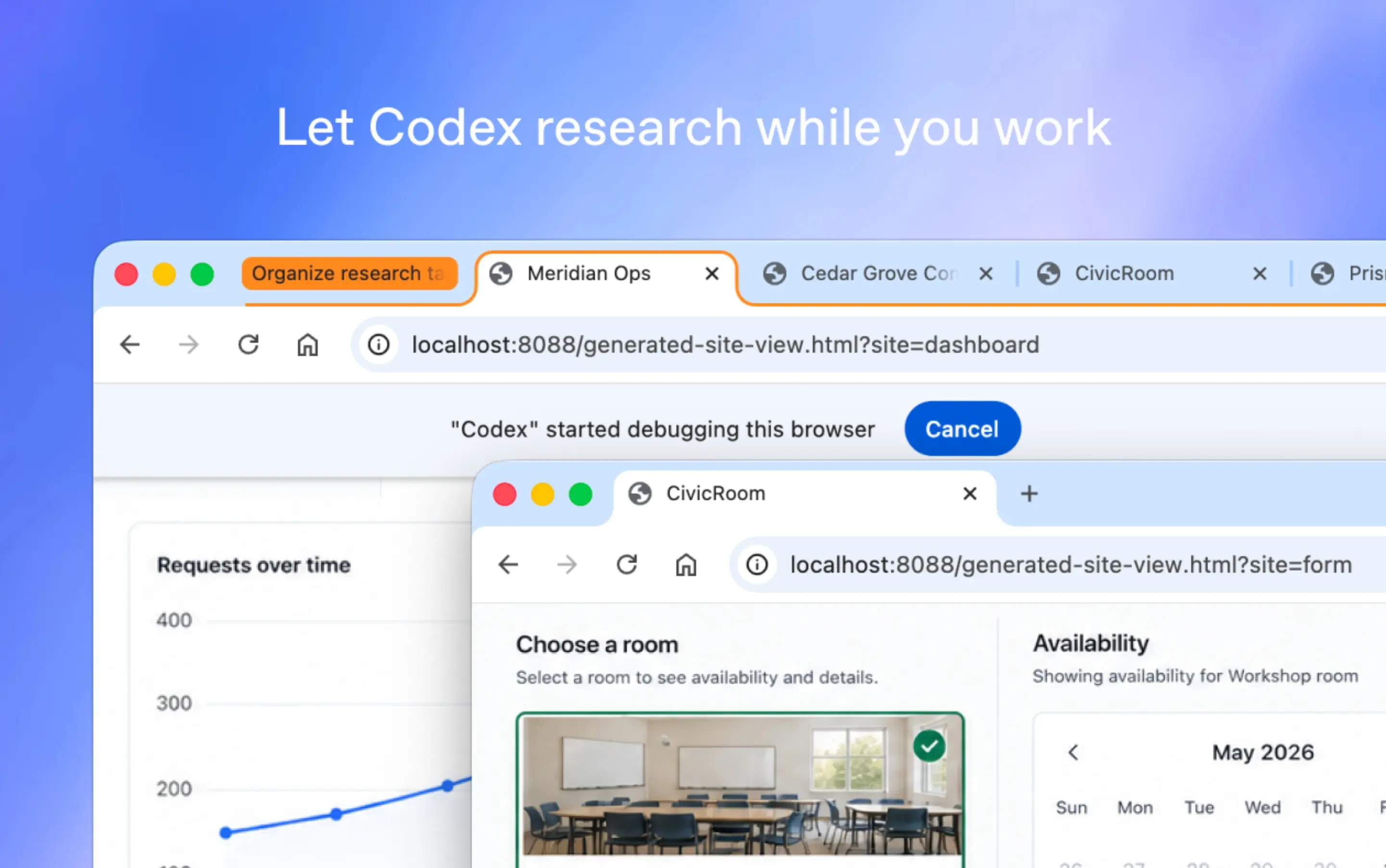
In addition, the Codex got a new browser extension to work directly inside Google Chrome on Windows and macOS. It allows Codex to do browser-based work, such as navigating structured pages, completing complex data entry flows, checking dashboards, and more.
AI is eating jobs

While tech CEOs keep claiming AI isn't here to replace you, more people are losing their jobs. DeepL CEO Jarek Kutylowski announced that his company plans to remove 250 roles to prepare for an "AI-native" future.
In other AI news, Anthropic is tapping into SpaceX's Colossus supercomputer to utilize 300 megawatts of compute capacity at the Colossus 1 data center. The latest update for Copilot Cowork introduced mobile support for iOS and Android, allowing users to manage background tasks remotely.
Sold in a blink!

Valve put its latest-generation Steam Controller on sale this week, and it vanished like steam from a boiling pot. The demand was so much that the Steam Controller store page went down momentarily and began showing an "Out of Stock" message for users in the US.
Following the shaky launch, Valve put restrictions on who can buy the new Steam Controller after restocking in a move to handle scalpers who may have had a hand in causing the disruption. Valve also released CAD files, enabling users to mod their controller while restricting use to non-commercial terms.
What else in gaming?

The latest issue of Pulasthi's Weekend PC Game Deals curates several exciting games on sale this week. This week's perks from the Epic Games Store are the casual games Trash Goblin and Arranger: A Role-Puzzling Adventure.
Xbox Free Play Days promotion brought two new titles for those with Game Pass: CATAN – Console Edition and Deadside. Meanwhile, Xbox Game Pass subscribers got plenty of day-one releases in May, including Forza Horizon 6, Subnautica, Outbound, and more.
Amazon Prime members can fill up their gaming libraries in May with Mafia II: Definitive Edition and ten more games. Cloud gaming fans with GeForce NOW got a fresh slate of games as part of the weekly update schedule, including Dead as Disco.
That said, here are some more stories from the gaming world:
- Nintendo is raising Switch 2 price to $500, but not immediately
- Civilization VII's most‑requested feature arrives May 19
- Xbox startup sequence is changing next week, catch the new green look here
- For GTA VI, Take‑Two CEO says core audience on consoles comes before PC
- Playground Games reveals Forza Horizon 6 music, performance, and more as the game goes gold
From the review corner

This week, Pulasthi got his hands on an early access launch of Dead as Disco by Brain Jar Games, which combines flashy rhythm action with tight combat controls and a killer soundtrack. With a $24.99 price tag, the game offers satisfying rhythm gameplay, well-directed music video-style boss battles, and custom music support. On the flip side, its curated content can last only for a few hours, and difficulty can be lacking.
More price drops!
We got you covered with some hot tech deals all week. For some reason, if you missed out on a great discount, here is a summary of some recent deals that are still alive:
- Google Pixel Fold 5G Smartphone - 256GB - $449.99 (75% off)
- Sapphire Pulse 9070 XT + free 750W 80+ Gold PSU - $699.99 (23% off)
- Dreame L40 Ultra Gen 2 Robot Vacuum and Mop - $499.98 (23% off)
- Intel Core Ultra 5 Processor 250KF Plus Desktop Processor - $199.99 (12% off)
- Apple iPad Air M4 128GB Wi-Fi - $519.99 (13% off)
- AMD Ryzen 7 9850X3D AM5 desktop processor - $459 ($40 off)
To view all of our recent deals, click here.
So, these were some of the biggest tech news and other updates from this week. There will be more issues of our 7 Days series in the coming weeks and months, so stay tuned. You can also support Neowin by registering for a free member account or subscribing to extra member benefits, along with an ad-free tier option.

















0 Comments
Load the comments and join the conversation!
Read the comments, ask the editors questions, show respect and join the conversation.