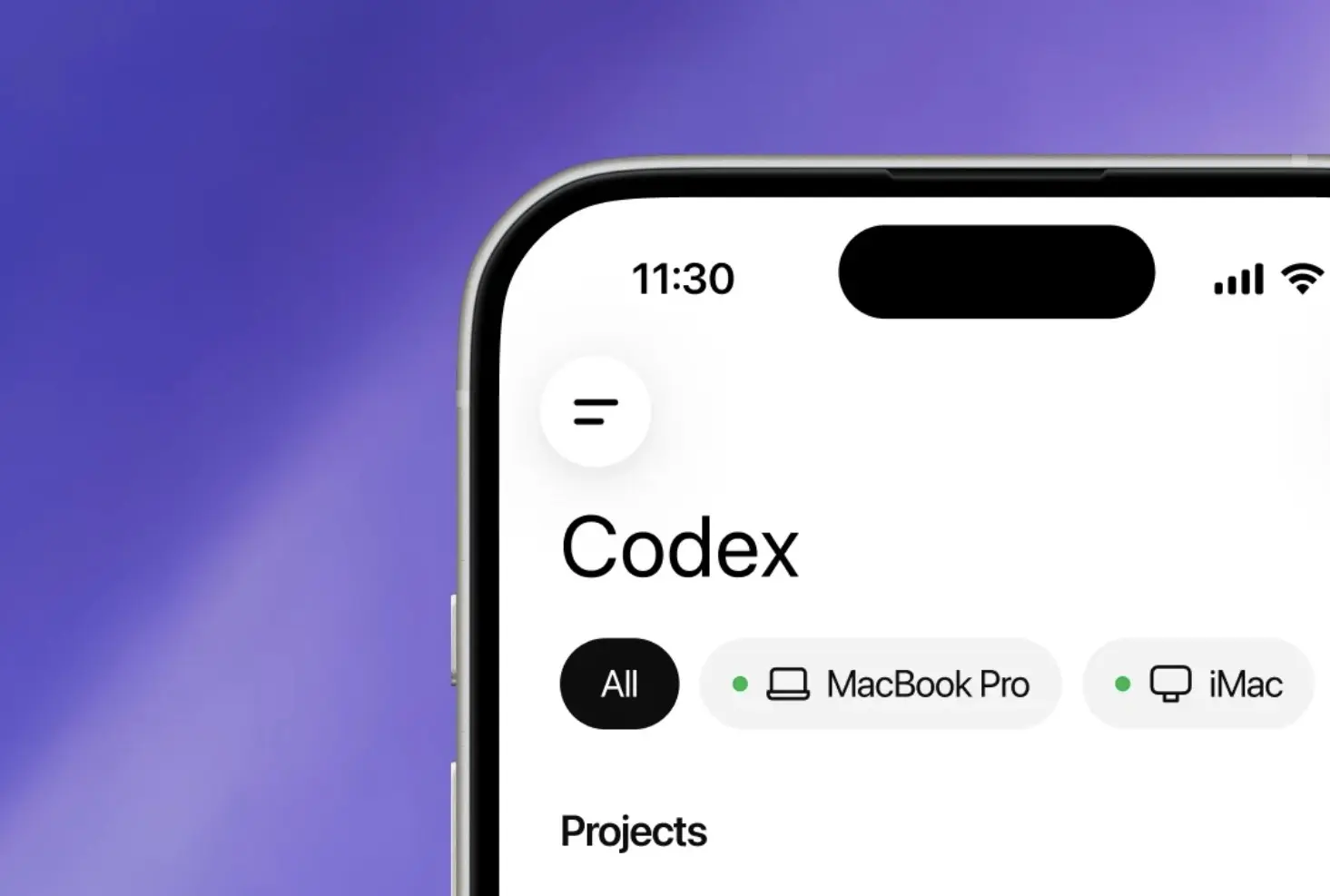
Over the past few months, OpenAI’s Codex has grown quickly, reaching more than 4 million weekly users. To help developers access Codex on the go, OpenAI today announced that it is bringing Codex to the ChatGPT mobile app, allowing them to monitor and steer coding tasks from their smartphones.
With Codex in the ChatGPT mobile app, developers can connect to machines where Codex is already running. This includes a laptop, a dedicated Mac mini, or a managed remote environment. Once connected, the app loads the live state from that environment, including active threads, approvals, plugins, and project context.
OpenAI highlighted that this new Codex mobile experience is not just a remote control for a single task. In fact, developers can review outputs, approve commands, change models, start new work, and follow updates in real time. If required, Codex can also send screenshots, terminal output, diffs, test results, and approval requests back to the mobile app for developers to take action.
Since the actual Codex operation is still happening in the existing environment, access to files, credentials, permissions, and local setup remain the same. OpenAI has developed a secure relay layer to connect the new Codex mobile experience to the Codex desktop app without exposing it directly to the public internet.
You've been asking for this one...
— OpenAI (@OpenAI) May 14, 2026
Now in preview: Codex in the ChatGPT mobile app.
Start new work, review outputs, steer execution, and approve next steps, all from the ChatGPT mobile app. Codex will keep running on your laptop, Mac mini, or devbox. pic.twitter.com/9i2Jckjt9z
Apart from Codex mobile, OpenAI today also announced better support for Codex inside enterprise environments. Remote SSH is now generally available, allowing Codex to connect to managed remote machines with approved dependencies, credentials, security policies, and compute resources. The Codex desktop app can detect hosts from a user’s SSH configuration and run projects inside those remote machines.
OpenAI today announced programmatic access tokens for CI pipelines, release workflows, and internal automation. Hooks also are now generally available allowing teams to scan prompts for secrets, run validators, log conversations, create memories, or customize Codex behavior for specific repositories and directories.
Remote SSH and Hooks are available on all ChatGPT plans. Programmatic access tokens are limited to Enterprise and Business plans. HIPAA-compliant use is available for eligible ChatGPT Enterprise workspaces when Codex is used in local environments.
Codex in the ChatGPT mobile app is now rolling out in preview on iOS and Android across all plans, including Free and Go, in supported regions. However, Codex in iOS and Android can only connect to Codex desktop app running on macOS for now. Windows support is coming later.















0 Comments
Load the comments and join the conversation!
Read the comments, ask the editors questions, show respect and join the conversation.